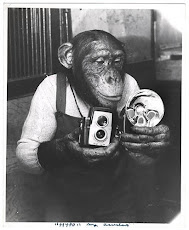
Homing Ship, New York 13 October, 1944The Museum of Contemporary Photography in Chicago has a very succinct bio on André Kertész that reiterates his under-recognized talent. (Click here to read it.) The bio starts off mentioning the quote by Henri Cartier-Bresson whereby he stated, "Whatever we have done, Kertész did first." The "we" in this case referred to a group of artists in Paris in the 1920s and specifically to the photographers that included Robert Capa and Brassai.
I have to admit that I learned about Kertész in the requisite History of Photography course at School of Visual Arts, but it is only now that I am really appreciating him. Initially, I probably like others dismissed his talent, not yet able to fully realize that what he did was just simply "pure" photography. It may seem trite or even pretentious to say "pure" but tell me upon looking at his work that you don't feel that exact descriptive.
Kertész's photography at first glance is understated, sometimes playful, sometimes ordinary, but upon further inspection, it is as if it breathes a new life into the viewer. The things we take for granted and his sort of one-on-one viewing of life brings us into a different perspective. We see the things Kertész saw as if with new eyes and I don't mean the obvious -- of course, a photographer can bring a new look to the familiar or convert the jaded and sway the popular opinion -- but this is about shedding every preconception and seeing the imagery as if you stripped everything away to its bare essence. It is so cleansing that we abandon the known to celebrate the apparent simplicity as a brand new interpretation. It may seem elementary on the surface, but it is layered so that the longer you look at one of his photographs, the more it reveals, the more unnerving that we didn't stop to, say, "smell the coffee". His work forces us to stop and inhale deeply.
Even his distorted images, long before the advent of Photoshop, don't feel "altered" per se. There is a sort of innocent confidence about them in the sense that they feel experimental yet deliberate and as if he worked only with the visuals -- the composition and the shape and form, not the technique.
It was in 1912 that Kertész began his long, illustrious and prolific career. He was born in Budapest in 1894 and in 1925, he moved to Paris where he remained until the threat of World War II prompted him to move with his wife to New York in 1936. He was still shooting in the 1980s when he then created a series using a Polaroid SX-70. He was clearly one to evolve and continue and persevere. His conviction was especially apparent in the fact that even when slighted -- even when others were credited for his work or when he was omitted from important exhibits, he did not let this deter him.
The term Kertészian was coined to describe his language which was essentially a combination of Hungarian, French, and English -- likewise, it has been observed that Kertész had three distinct periods, the Hungarian Period, the French Period, the American Period.
Kertész did something that ironically is not always done -- he shot photography so honestly that you tend to think that he created the art itself. That is what I mean by "pure".
 Broken Plate1929
 Underwater Swimmer1917
 MartiniqueJanuary 1, 1972
 Arm in VentilatorDecember, 1937
+violinists+tune+1921.jpg) The Violinist's Tune1921
The Violinist's Tune1921 Circus, Budapest, Hungary1920
 Carrefour, Blois 1930
 Carousel Figures on Truck1920s
 Avenida Grde Julio, Buenos Aires1962
 Rainy Day, Tokyo14 September, 1968
 Recess1938
 Boy Holding Puppy1928
 Mademoiselle L1929
 On Reading, New York1969
 Wooden Puppets, Paris1929
 Slaughter House18 April, 1937
 Bike Stand, Washington Square Park22 October, 1961
 Corner Building, Tree BranchesJune 16, 1963
 Montmartre
1927 Washington Square, Day1954
 Washington Square at Night1954
 On the Boulevards1934
 Eiffel Tower, Paris1933
 MacDougal Alley, New York1961
 Solitude, New York1960
 Defense d’ Afficher, Paris1936
 Chez Mondrian1926
 Melancholic Tulip, New York1936
 Distortion #76C1933
 Distortion #401933
 Distortion #61933~~~ + ~~~His later work as shot with a Polaroid SX-70:


 A photograph of two lovers was sent to the Archimedes Laboratory where Courtney Smith, Gianni Sarcone, and Marie-Jo Waeber collaborated on this 2011 Illusion of the Year entitled, "Mask of Love". At first you see a single face adorned with the Venetian mask. Upon further inspection, you will see the original image of the two lovers. This type of illusion is called a bistable illusion. To read more, click here.

 Homing Ship, New York
  Broken Plate
 Underwater Swimmer
 Martinique
 Arm in Ventilator
+violinists+tune+1921.jpg) The Violinist's Tune
The Violinist's Tune Circus, Budapest, Hungary
 Carrefour, Blois
 Carousel Figures on Truck
 Avenida Grde Julio, Buenos Aires
 Rainy Day, Tokyo
 Recess
 Boy Holding Puppy
 Mademoiselle L
 On Reading, New York
 Wooden Puppets, Paris
 Slaughter House
 Bike Stand, Washington Square Park
 Corner Building, Tree Branches
 Montmartre
 Washington Square, Day
 Washington Square at Night
 On the Boulevards
 Eiffel Tower, Paris
 MacDougal Alley, New York
 Solitude, New York
 Defense d’ Afficher, Paris
 Chez Mondrian
 Melancholic Tulip, New York
 Distortion #76C
 Distortion #40
 Distortion #6
 1981
1981 1979
1979 1979
1979 1981
1981 1979
1979 1981
1981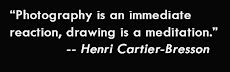


 Posts
Posts