Female objectification and objectification in general have probably been around throughout history because even the simple matter of looking your best or dressing to titillate could be construed as objectification. We label it offensive yet we also celebrate it in fashion and in erotica. Let's not forget that attraction is often a catalyst in furthering a species -- it's part of our biology. To objectify would then be a more concentrated, or exaggerated and sometimes distorted derivative.
I may as well add that so far as I know, the ones being exploited (for lack of a better word), the subjects being labeled as sex objects, the objects of desire, those viewed as "eye-candy" don't seem to mind, unless of course they suspect they are valued only for their looks. Instead, it appears that mostly those who are not sex objects, those not interested in upping the volume on appearances, or those who are objectified but not taken seriously are the ones objecting to objectification.
But, this post is about photography not philosophy!
Although that could be debatable, too. Photographs send messages. A portrait can be interpreted as a revealing of the soul. Fashion imagery is less about portraying a person and more about mood and eliciting a response -- we use a model as a mere prop or we catapult her to Goddess status. Either way, the model is objectified.
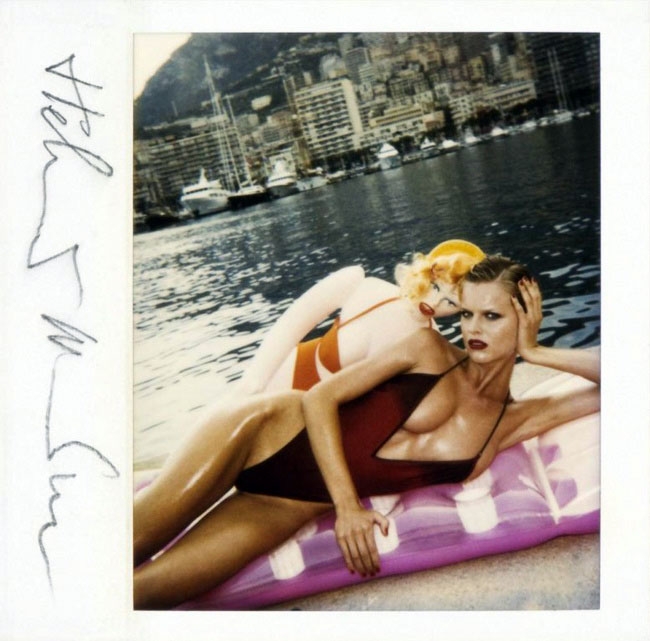
Here are some images which could spark a debate, the first of which I believe could be the inspiration to the others. My sentimental and personal favorite, an industry pioneer, Helmet Newton pushed boundaries and introduced elements of objectification, bondage and sado-masochism into his imagery consistently. Today, his depictions seem almost tame, much like Nirvana appealing to the easy listening audience. He propelled the provocative into the mainstream of society and today we can see erotica throughout -- from stilettos taking on fetishism to Ellen von Unwerth depicting scenes of her models as dominatrixes or submissive creatures held captive such as in her "Revenge" series.
From David Lachappelle to Tony Ward to the bordering on porn Terry Richardson, erotica has come to grace the face of fashion. Fetishes once relegated to the status of decadence or taboo, can now be seen not only in sub-culture realms, but in the world of fine art. The designer, David Blazquez created human furniture just as forniphilia became a niche in the world of sexual proclivity.
Then again, maybe this is all old news. Afterall, Samal Design has been manufacturing human furniture in Paris, Allen Jones sculpted women as furniture in the 1960s which subsequently led to the photographer, Jemima Stehli posing herself as Allen Jones's furniture in 1999 amidst other recreations of iconic, provocative imagery including that by Helmet Newton. Further back we can trace roots of objectification to Francois-Rupert Carabin who created Art Nouveau depictions of women supporting or clinging from items of utilitarian function in the late 1800s.
(Credits appear below each image -- in the case where a link is not provided above, the link will appear with the credit.)
 Helmut Newton (1976)
 Ellen von Unwerth
 David Blazquez
 David Blazquez
 Ellen von Unwerth
SAMAL Design
Allen Jones
 Allen Jones
 David Lachapelle (utilizing model and Allen Jones table)
Jemima Stehli
 Jemima Stehli
 Francois-Rupert Carabin
 Francois-Rupert Carabin
 Francois-Rupert Carabin
 Ellen von Unwerth (note how this photograph is reminiscent of Francois-Rupert Carabin's Art Nouveau woman supporting a shell vessel from the 1890s)
We know that for at least 200 years, from the 1800s and into the present and undeniably looking to the future, objectification is not just a trend, it is part and parcel of our culture and society at large. Whether embraced and regaled or denounced, it is a fixture in fashion, sexuality, and the subconscious imagination.






 Posts
Posts