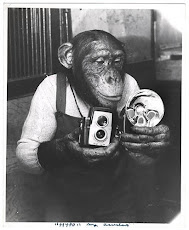
Today I looked at the work of André Kertész (in part to prepare for an upcoming post). Today I also am working on a submission for my stock agency. Today I'm in technical hell while reminded of the genius of the masters and how simplicity ruled. A sort of less is more approach as applied to process. With all the technological advances in photography comes the equal and sometimes more significant issue of frustration.
On top of that comes the issue of greater quantity since digital is more accessible, more forgiving, more prone to causing a willy nilly style of shooting. When in doubt, fire away! And bracket galore! You don't even have to know what you're doing! With all that mass and volume -- the ability to shoot thousands and thousands of images, no worry to the time developing nor the cost, the edits along with the photographers must be whittled down so that competition is sometimes based on the technical alone. This explains the phenomenon of tech geek turned photographer.
What I mean is that if you place two photographs side by side and they are identical, the one with greater resolution will win even if the image is supposed to be, say, underexposed or too contrasty. Reproduction rules even in the realm of photographs intended only for a gallery wall. With film, you could intentionally blow out your whites or block up your blacks.
I miss the darkroom and the endless hours of watching something grow before your eyes. More so, I miss the film -- how shooting it was more deliberate and even, more ceremonial. Revealing your final results was like unveiling a long awaited sculpture. Don't even get me started on the tactile enjoyment of film or that great sound of the film being wrapped around a reel -- how it was at once crisp and yet mellow. (I know, I'm romanticizing.)
As much as I love the immediacy of digital shooting, I miss the fact that quality was almost anything you wanted it to be. If you wanted grain or overexposure, no problem! If you wanted to shoot "low res" through a Coke bottle and a cardboard box or if you wanted to smear Vaseline all over your lens, it was allowed. No matter what you did, you could always chalk it up to art.
I'd like to just pick up my camera, grab a fleeting moment and know that it's going to be judged not on perfection but vision and interpretation of a scene or subject. It's as if all the requirements for technical prowess are stifling creativity. One of the very things we love about digital, the spontaneity, gets kicked in the bum and bogged down by rules and histograms and mega bytes. If you can't blow it up to the size of a billboard, be prepared to re-shoot or forget it.
But don't get me wrong. I do thoroughly appreciate digital -- I love the ease and instant gratification, even the reduced expense on materials. There are the added infinite pleasures of post-production as if Photoshop is the venue for some all-night party and it is, after all, the modern day darkroom. I don't know if I'm wistful or rebellious. I long for the elementary and I get ornery when I feel intimidated. Technical schmechnical. It's just so hard to colour within the lines.




 Posts
Posts